

May 2026
At a moment when reproductive health research faces both unprecedented scientific opportunity and growing uncertainty in funding, Cornell University hosted the 2026 Tri-State Symposium on Reproductive Sciences, bringing together researchers from across the Northeast to examine the biology of reproduction — from contraception and gamete development to pregnancy and lifelong health outcomes — and to consider what comes next.
Held April 30–May 1, 2026, the annual meeting is a unique partnership across four primary institutions, and rotates among members Cornell University, the University of Pittsburgh’s Magee-Womens Research Institute, the University of Pennsylvania and Rutgers University. This year’s gathering highlighted not only cutting-edge discoveries, but also the collaborative networks and federal support that sustain the field.
“This symposium is about building a scientific community,” said Paula Cohen in opening remarks. Cohen is professor of genetics in the department of Biomedical and Translational Sciences, founding director of the Cornell Reproductive Sciences Center (CoRe), and associate dean for Research and Graduate Education at the College of Veterinary Medicine (CVM). Also the organizer of this year’s event, Cohen said, “We are bringing together trainees and senior investigators to push forward research research that directly affects reproductive health, including fertility, contraception, healthy pregnancy and lifelong developmental health.. The findings presented here represent some of the most groundbreaking and important research in the field of reproductive sciences.”
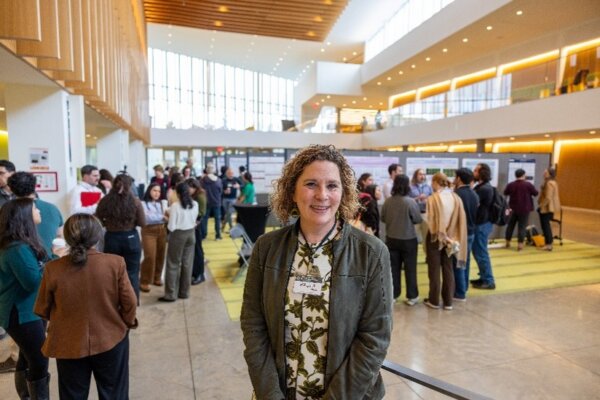
Figure 1: Professor Paula Cohen
Cohen’s research lab has particular emphasis on meiosis, the specialized form of cell division in sexually reproducing organisms that provides genetic diversity and the maintenance of chromosome numbers after fertilization. She established CoRe in 2007, focusing the Center on addressing key challenges in reproductive health, centered on investigating the fundamental biology of the reproductive system as it pertains to fertility, health and nutrition, pregnancy, and early childhood development. It is one of seven U.S. NCTRI (National Center for Translational Research in Reproduction and Infertility) centers funded by the National Institute of Child Health and Human Development to advance reproductive medicine by translating laboratory discoveries into clinical applications related to fertility, contraception and reproductive health.
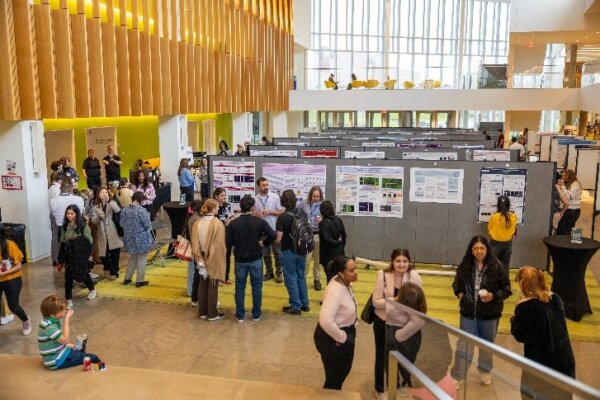
The Tri-Repro Symposium, as it is colloquially known, is one of the primary vehicles for facilitating collaboration and the exchange of findings across the NCTRI centers in NY, PA and NJ. The symposium also welcomes researchers outside of the NCTRI network, who can attend the conference for free. Across four scientific sessions, keynote speakers and researchers explored core questions in reproductive biology — from how eggs age and embryos develop, to how environmental exposures and immune signals shape fertility, and dove into career and funding options to ensure continuity in the crucial area of reproductive sciences research.
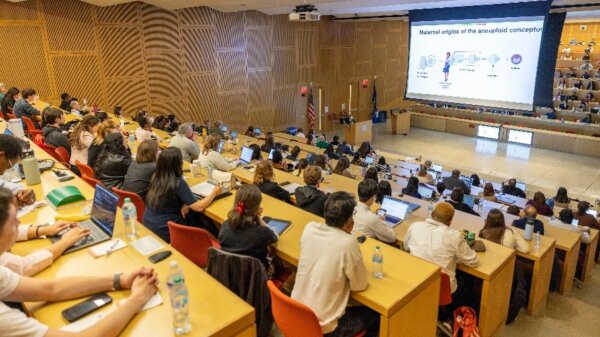
Figure 2: Stuart Moss Memorial Lecture
Ovarian biology and reproductive lifespan
The first session focused on ovarian biology, a cornerstone of fertility research. Researchers noted that reproductive science increasingly intersects with questions of reproductive timing and personal choice — not only whether individuals can have children, but when they choose to do so. Understanding ovarian aging and egg quality has become increasingly important as many people delay pregnancy later into adulthood. In the session keynote address, Kathryn Grive, assistant professor of Obstetrics and Gynecology (Research) at Brown University, and a former CoRe postdoctoral fellow, focused on the ovary as a key driver of systemic female aging, rather than just a fertility organ. She examined how a protein involved in cellular quality control helps determine oocyte (egg cell) health and ovarian aging. Her work points to molecular pathways that may link reproductive aging to broader health outcomes, including neurodegeneration. “Our findings are important,” Grive said, “because they suggest that whole-body health can be derived from oocyte health and quality, and that reproductive aging should be considered as a comorbid or coexisting condition during preventive care, in order to best counsel and care for patients.”
 Reproductive science is also increasingly evaluating environmental health because researchers are finding that environmental exposures can directly affect fertility, pregnancy, reproductive development and even the health of future generations. Researchers are studying microplastics and “forever chemicals” like PFAs, and finding links to infertility, lower sperm counts, and earlier puberty.
Subsequent talks underscored how potentially fragile ovarian systems can be. Researchers presented evidence that environmental contaminants such as micro- and nano plastics may disrupt follicle development, while others used single-cell sequencing to reveal conserved aging programs across mammalian ovaries. Together, the studies reflect a growing recognition that fertility is shaped by both intrinsic biology and environmental exposure.
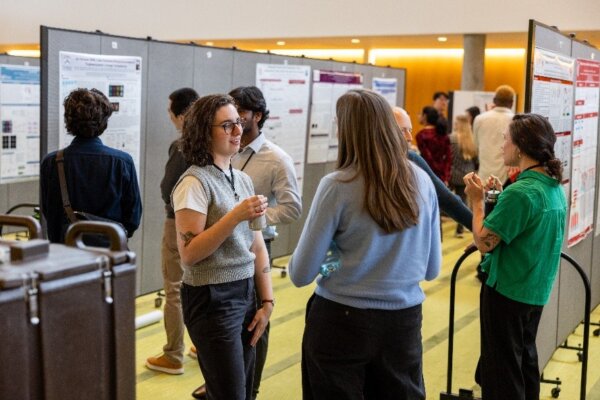
Genetic and cellular control of the germline
If ovarian biology shapes reproductive lifespan, germline development determines how genetic information is faithfully carried into the next generation. The second session turned to the mechanisms that govern germline development — the cells that ultimately give rise to sperm and eggs. Jongmin Kim, assistant professor in the Department of Biomedical and Translational Sciences in CVM at Cornell, delivered the session keynote on how transcriptional regulation and chromatin structure ensure proper gene expression in the testis. “The research is important because gene regulation is at the core of making functional sperm—we’re investigating the fundamental mechanisms behind it.”
Several presentations emphasized aneuploidy, the presence of an abnormal number of chromosomes in eggs or sperm, as one of the most significant challenges in human reproduction. Aneuploidy is a leading cause of miscarriage and developmental disorders such as Down syndrome, and occurs at unusually high rates in human eggs compared with most other mammals. Researchers discussed how failures during meiosis and chromosome segregation contribute to these errors, particularly as reproductive age increases.
“Human reproduction is remarkably error-prone at the chromosomal level,” Cohen said. “Understanding why eggs and sperm acquire the wrong number of chromosomes is essential not only for infertility research, but for preventing miscarriage and developmental disorders.”
Reproductive science is also increasingly intersecting with systems biology by shifting from reductionist, single-molecule studies to integrative, multi-omics approaches (genomics, proteomics, metabolomics) that analyze the entire reproductive system. The session highlighted fundamental processes such as DNA repair, chromatin dynamics and intercellular communication in developing germ cells. These basic mechanisms, researchers emphasized, are essential not only for fertility, but also for preventing genetic errors that can lead to infertility, miscarriage or inherited disease.
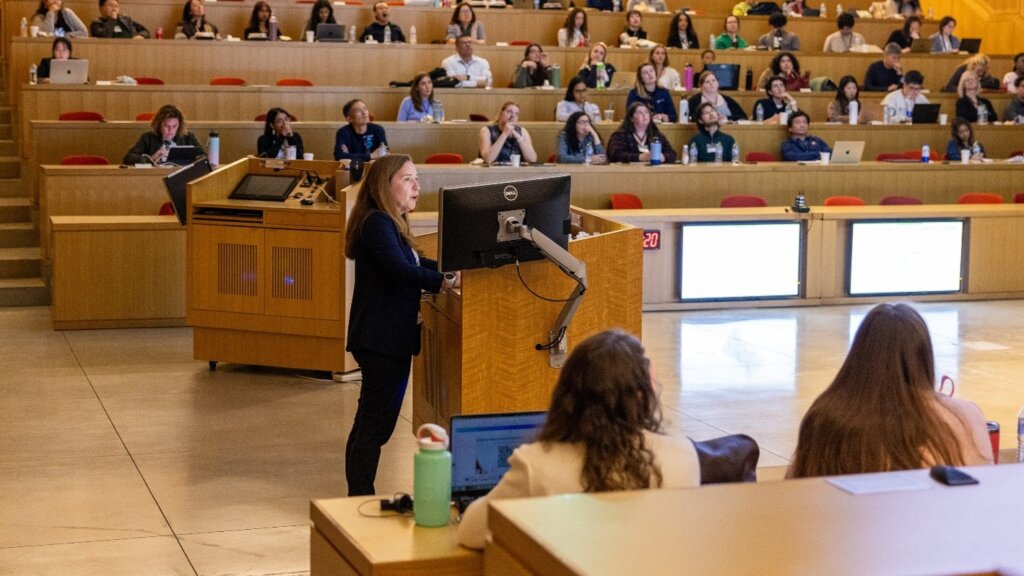
Figure 3: Karen Schindler of Rutgers University
Karen Schindler, professor of genetics at Rutgers University, delivered the keynote Stuart Moss Memorial Lecture. Moss was a program officer at the NICHD, where he directed the Male Reproductive Health Program, led NCTRI, and was hugely influential in the formation of the Tri-Repro Symposium. Schindler’s keynote examined the genetic foundations of oocyte quality and their implications for infertility and early embryonic loss.
“This work is really important in trying to understand why infertility rates are increasing worldwide and becoming a pressing societal issue,” Schindler said.
From fertilization to embryo development
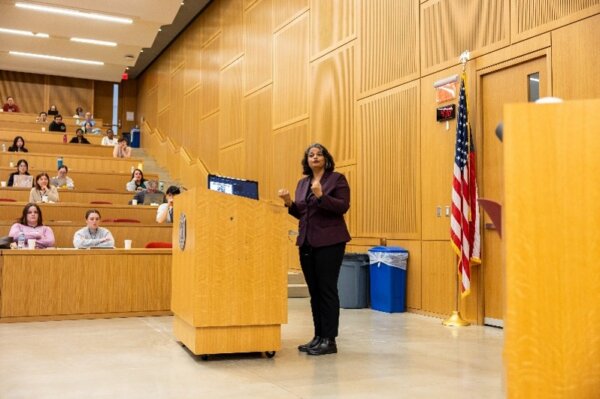
Figure 4: Cornell Provost Kavita Bala
Cornell Provost Kavita Bala gave welcoming remarks in the morning session, and spoke about the future of the American University, as well as the future of health sciences. “Cornell is dedicated to supporting the important research being done here in the reproductive sciences,” Bala said, “and collaborating with our partner institutions in advancing reproductive health.”
Speakers also spoke on their mounting concerns about the future of federally funded basic research, which has historically underpinned major advances in reproductive medicine, from IVF to genetic screening. Researchers noted that universities remain central to long-term discovery science that private industry often cannot sustain alone.
Long-term basic science acts as the foundational pillar for much reproductive healthcare and translational fertility advances, transforming understanding of reproductive biology into clinical applications like IVF, egg freezing, and genetic screening. While historically driven by academia, private industry is increasingly involved in translational research, focusing on automation, AI, and optimizing existing procedures, though they generally shy away from long-term, fundamental research due to high costs and uncertain returns. Researchers noted that uncertainty in long-term federal funding could have major implications for basic reproductive science, which often requires sustained investment over many years before clinical applications emerge.
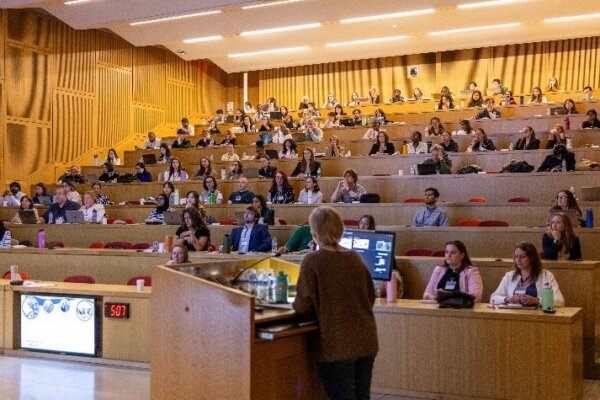
Incorporating the idea that trainee development (as well as grant and funding training) is also pipeline sustainability for the next round of researchers, a trainee career forum was hosted by Travis Kent from NICHD, Sylvia Kang of Mira, and Robert Yamulla of Illumina, Inc. To help season the presentation skills of the undergraduate attendees, five undergraduate researchers from universities across the northeast presented rapid-fire “elevator pitches” on topics ranging from non-hormonal contraceptive targets to the role of the microbiome in ovarian aging — signaling a strong pipeline of emerging scientists in the field. This session represented the first time that undergraduates had participated in presentations at the symposium and was one of the highlights of the two-day event.
In the third session, Steven Tang, assistant professor at Yale School of Medicine, and a graduate of Cornell’s PhD program, used the keynote to examine how sperm and egg recognize and fuse with one another — a process fundamental to life, yet still incompletely understood. Other presenters explored the genetic and molecular choreography of fertilization, including ion channels that activate eggs and structural features that influence chromosome segregation.
These studies are helping explain why fertilization sometimes fails — or succeeds imperfectly — leading to chromosomal abnormalities that can contribute to miscarriage, infertility and developmental disorders.
Programming development before birth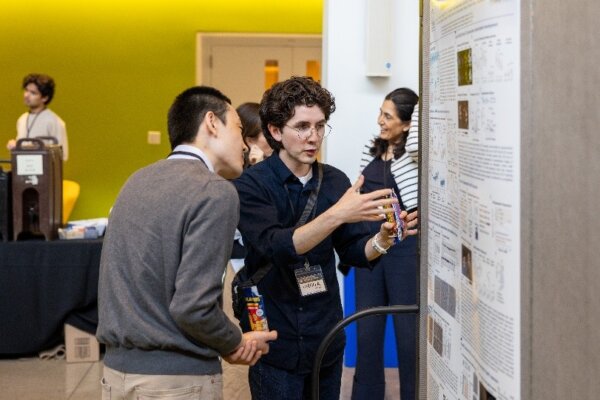
The final session, on early developmental programming, addressed how events before and shortly after conception can shape long-term health. Haifan Lin, Eugene Higgins Professor of Cell Biology, and Professor of Genetics, of Obstetrics, Gynecology & Reproductive Sciences, and of Dermatology in the Yale School of Medicine led the session off. Lin, a leader in stem cell biology, delivered the keynote on how small RNA pathways regulate gene expression in the germline. “The genetic control of life processes,” Lin said, “is far more complex than what the central dogma of molecular biology alone can explain.”
Talks that followed examined how paternal immune experiences can influence offspring health, how placental chromatin signatures relate to fetal growth, and how early trophoblast development may go awry in genetic disorders.
Taken together, the session reflected a shift in reproductive science: from viewing reproduction as a discrete event to understanding it as the beginning of lifelong biological programming.
Science, policy and the future of the field
Beyond science, the symposium also addressed the broader ecosystem supporting reproductive research. A trainee career forum featuring speakers from industry, federal agencies and biotechnology highlighted diverse career pathways — and the importance of sustained investment in the field. Funding from the National Institutes of Health, including the Eunice Kennedy Shriver National Institute of Child Health and Human Development, as well as support from partner institutions, remains critical to advancing discoveries presented at the symposium.

Figure 5: The organizing committee and keynotes for the 2026 Tri-State Symposium on. From left: Taylor Miller-Ensminger, Jing Zhang, Jules Balough, Karen Schindler, Travis Kent, Maddy Terry, Marisa Bartolomei, Phia Maddocks, Kyle Orwig, Christine Rourke, Jongmin Kim, Saloni Dhopte, Haifan Lin, Rachel Bradley, Paula Cohen, and Anya Samiljan.
Yet researchers noted that reproductive health has historically been underfunded relative to its impact on public health. The breadth of topics at Tri-Repro — spanning infertility, contraception, environmental health and developmental biology — underscores both the complexity of the field and the need for continued support.
As the meeting concluded, Cohen emphasized the importance of collaboration and mentorship in sustaining progress. “The future of reproductive science depends on the trainees presenting here, and the centers supporting their work,” she said. “Their work is already shaping how we understand fertility, health and disease.”
The symposium underscored how reproductive science is undergoing a profound conceptual shift: from viewing reproduction as a discrete biological event to understanding it as the beginning of lifelong biological programming. Across sessions on fertility, embryonic development, environmental exposures and reproductive aging, researchers highlighted growing evidence that the earliest stages of life can shape health trajectories decades later, influencing risks for metabolic disease, cancer, infertility and neurological disorders. The discussions reflected a field that is increasingly interconnected with public health, environmental science and precision medicine, while reinforcing the importance of sustained investment in reproductive research. Together, the work presented at the Tri-State Symposium illustrated how advances in reproductive science are no longer focused solely on conception and infertility, but increasingly on reproductive autonomy, contraception, healthy pregnancy outcomes and understanding how early developmental biology shapes lifelong health.
The Tri-State Symposium on Reproductive Sciences is a collaborative effort among four rotating host institutions — Cornell University, the University of Pittsburgh’s Magee-Womens Research Institute, the University of Pennsylvania’s Perelman School of Medicine and Rutgers University — and is supported by a combination of institutional and federal sponsors. Core backing comes from the Cornell Reproductive Sciences Center, including NIH grant support (P50 HD096723), as well as the Stuart Moss Memorial Fund and the Center for Women’s Health and Reproductive Medicine at Penn. Additional institutional support is provided by Magee-Womens Research Institute and the Rutgers University Reproductive Sciences Group. Federal funding is supplied through the Eunice Kennedy Shriver National Institute of Child Health and Human Development (NICHD) via the Tri-Institutional Symposium on Reproductive Biology and Infertility (Tri-Repro) grant (R13 HD102144), with further grant support from the Society for the Study of Reproduction, reflecting a broad partnership that sustains the symposium’s research and training mission.
Henry C. Smith is communications specialist for Biological Systems at Cornell Research and Innovation.