Ren Lab Published a Review in Reproduction on C/EBP Transcription Factors in Ovarian Biology
October 2026 A recent review published in Reproduction by graduate student Kashish Jain and postdoctoral researcher Dr. Hanxue Zhang from Dr. Yi Athena Ren's lab, in collaboration with Dr. Holly LaVoie from the University of South Carolina, explores the roles of CCAAT/enhancer-binding protein (C/EBP) transcription factors in ovarian development and function. The review focuses [...]

Alexander Gleed Awarded K99/R00 Grant For Fetal Brain Maturation Research
October 2026 The Cornell Reproductive Sciences Center is thrilled to congratulate CoRe community member Dr. Alexander Gleed on his recent K99/R00 grant! Dr. Gleed's project looks at quantitative ultrasound-based characterization of human fetal brain maturation. The purpose of this project, Gleed writes, "is to look at microstructural changes in the fetal brain at different [...]

Anna Sophia McKenney receives American Roentgen Ray Society Scholarship in Radiology
July 2026 Congratulations to CoRe Member Dr. Anna Sophia McKenney for receiving the 2026 American Roentgen Ray Society (ARRS) scholarship in radiology! Anna will receive two years of funding as an early-career faculty member pursuing radiological research. She will also be formally recognized at the 2026 ARRS annual meeting in Pittsburgh, Pennsylvania. You can [...]

de Mestre and Das labs publish review in Journal of Equine Medicine on contributing factors to equine pregnancy loss
July 2026 This review, led by Graduate Student Anna McKane in the Das and de Mestre laboratory, examines how genetic abnormalities, particularly problems with chromosome numbers, contribute to pregnancy loss in horses and explores whether assisted reproductive technologies might influence these issues. Emerging evidence suggests that embryos created through laboratory techniques may have different [...]

PLOS Genetics publication by Cohen and Grimson labs explores the role of Argonaute proteins
July 2026 This collaborative work, led by Mercedes Carro, a Research Associate from the Cohen lab, and Alexis Dzubiek, a Postdoctoral Associate from the Grimson lab, explores the role of Argonaute proteins in orchestrating gene expression during mammalian spermatogenesis. Using knockout mouse models, immunohistochemistry, and multiomics approaches, the team found that Argonaute proteins ensure [...]

New manuscript by Tegan Horan challenges the existing understanding of chromosome exchanges
June 2026 Tegan Horan, a Research Associate in the Cohen lab, has published a new manuscript in the Oxford Academic’s Molecular Biology and Evolution journal that sheds new light on the process by which mammals complete chromosome exchanges. Per Tegan: "During the production of eggs and sperm, pairs of chromosomes exchange pieces of DNA [...]
Schimenti lab publishes new findings on underlying molecular mechanisms of placental development
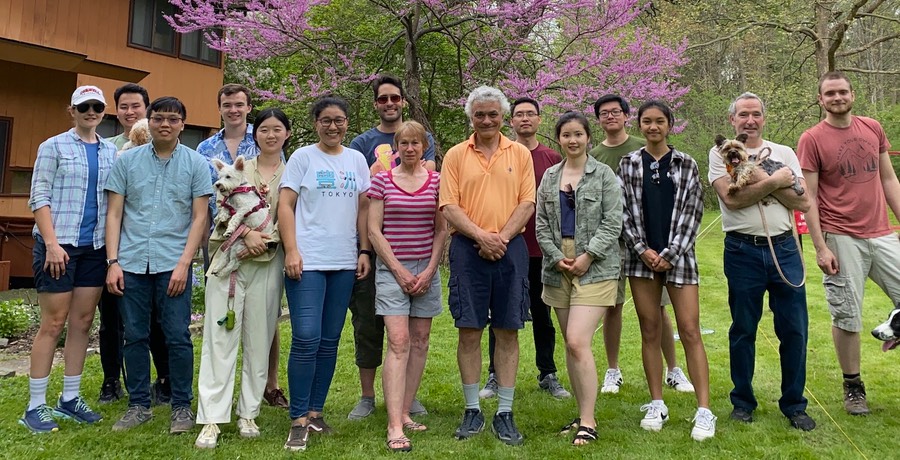
May 2026 Dr. John Schimenti's lab has recently published a new research article in PLOS Genetics, "Chronic replication stress-mediated genomic instability disrupts placenta development in mice." Through using mouse models with ongoing DNA replication stress, Schimenti lab researchers found that placental stem cells in their earliest stage lose the ability to self-renew, which results in [...]

At Tri-Repro Symposium, scientists tackle fertility and the future of reproductive health
May 2026 At a moment when reproductive health research faces both unprecedented scientific opportunity and growing uncertainty in funding, Cornell University hosted the 2026 Tri-State Symposium on Reproductive Sciences, bringing together researchers from across the Northeast to examine the biology of reproduction — from contraception and gamete development to pregnancy and lifelong health outcomes [...]

Cohen Lab Publishes Breakthrough Article on Male Contraception in PNAS
April 2026 The Cornell Chronicle, Cornell University's biggest news platform, recently published a feature on a new publication in PNAS from Paula Cohen's lab. The research article, "Meiotic prophase I disruption as a strategy for nonhormonal male contraception using small-molecule inhibitor JQ1," demonstrates that JQ1, a small-molecule inhibitor, can act as a male contraceptive [...]

NSF Graduate Research Fellowships Awarded to CoRe Lab Trainees
April 2026 The Cornell Reproductive Sciences Center is thrilled to extend its congratulations to Analise Coon (Das lab), Julia Picker (Kim lab), and Amanda Sun (Clark lab), three CoRe trainees who received very sought-after National Science Foundation (NSF) Graduate Research Fellowships! This highly competitive fellowship opportunity provides three years of fellowship stipend and two [...]


News and Breakthroughs
October 2026 A recent review published in Reproduction by graduate student Kashish Jain and postdoctoral researcher Dr. Hanxue Zhang from Dr. Yi Athena Ren's lab, in collaboration with Dr. Holly LaVoie from the University of South Carolina, explores the roles of CCAAT/enhancer-binding protein (C/EBP) transcription factors in ovarian development and function. The review focuses [...]
Contact
(* denotes a required field)

QUICK LINKS
CONTACT
Department of Biomedical, Sciences,
Veterinary Research Tower,
Ithaca, NY 14853
core@cornell.edu
LEGAL